
“Modular Content and Blocks are the secret sauce in DatoCMS. We can set up the website and the authoring side almost infinitely in any way we want.”

One CMS.
Just enough features.
We believe in keeping things simple, and giving you the right feature-set tools to get the job done.


The essential features that you would interact with most often in DatoCMS.

Run each site, app or client as its own Project, with its own content, settings and branding, so your team stays organized.
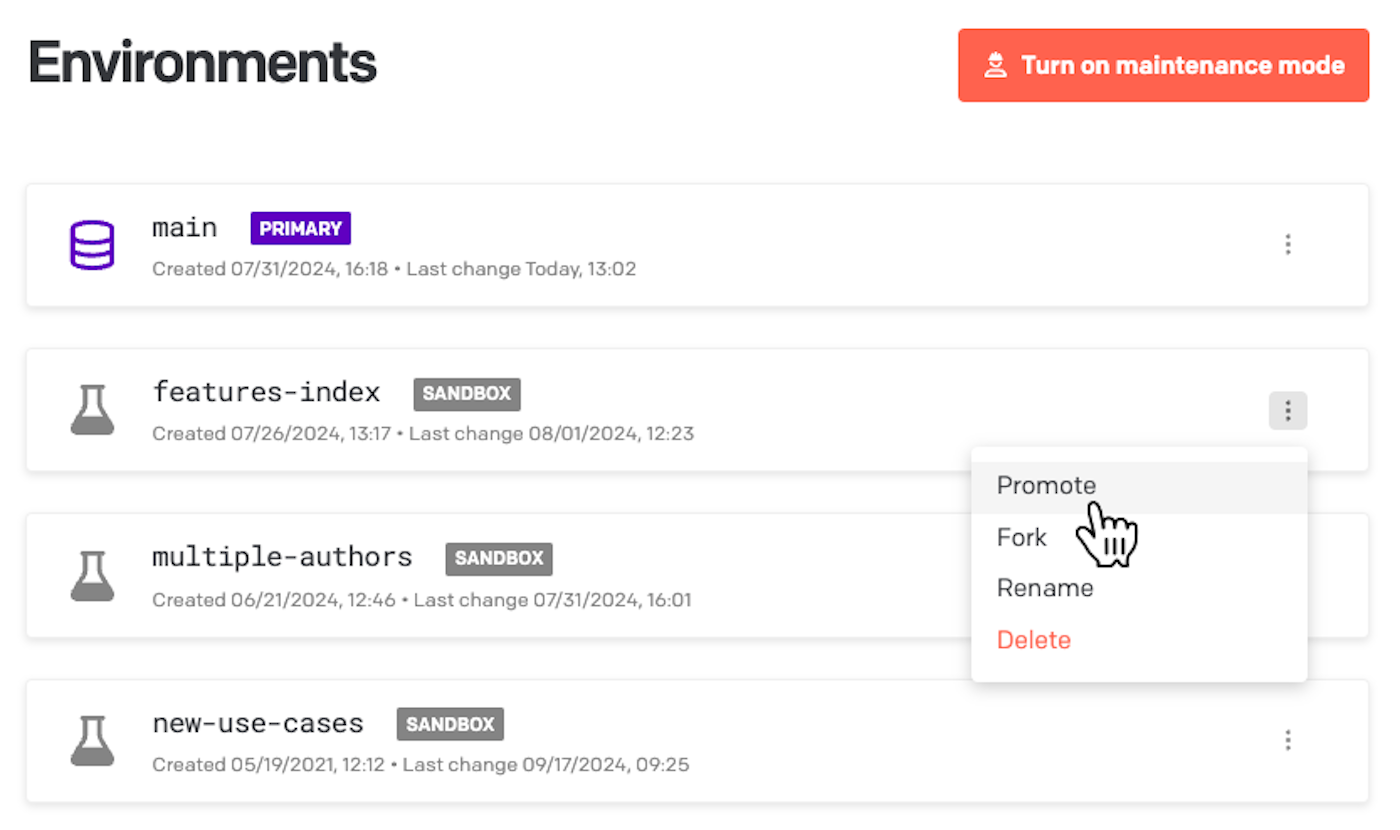
Sandbox environments are fully isolated copies of your project (think branches), so devs can test changes safely without touching production.

Build models, blocks and fields without code. Each field comes with validations and presentation options that give editors the right guardrails.

Use single instance models for one-of-a-kind records like your home page, navigation, or About section, perfect for unique layouts.
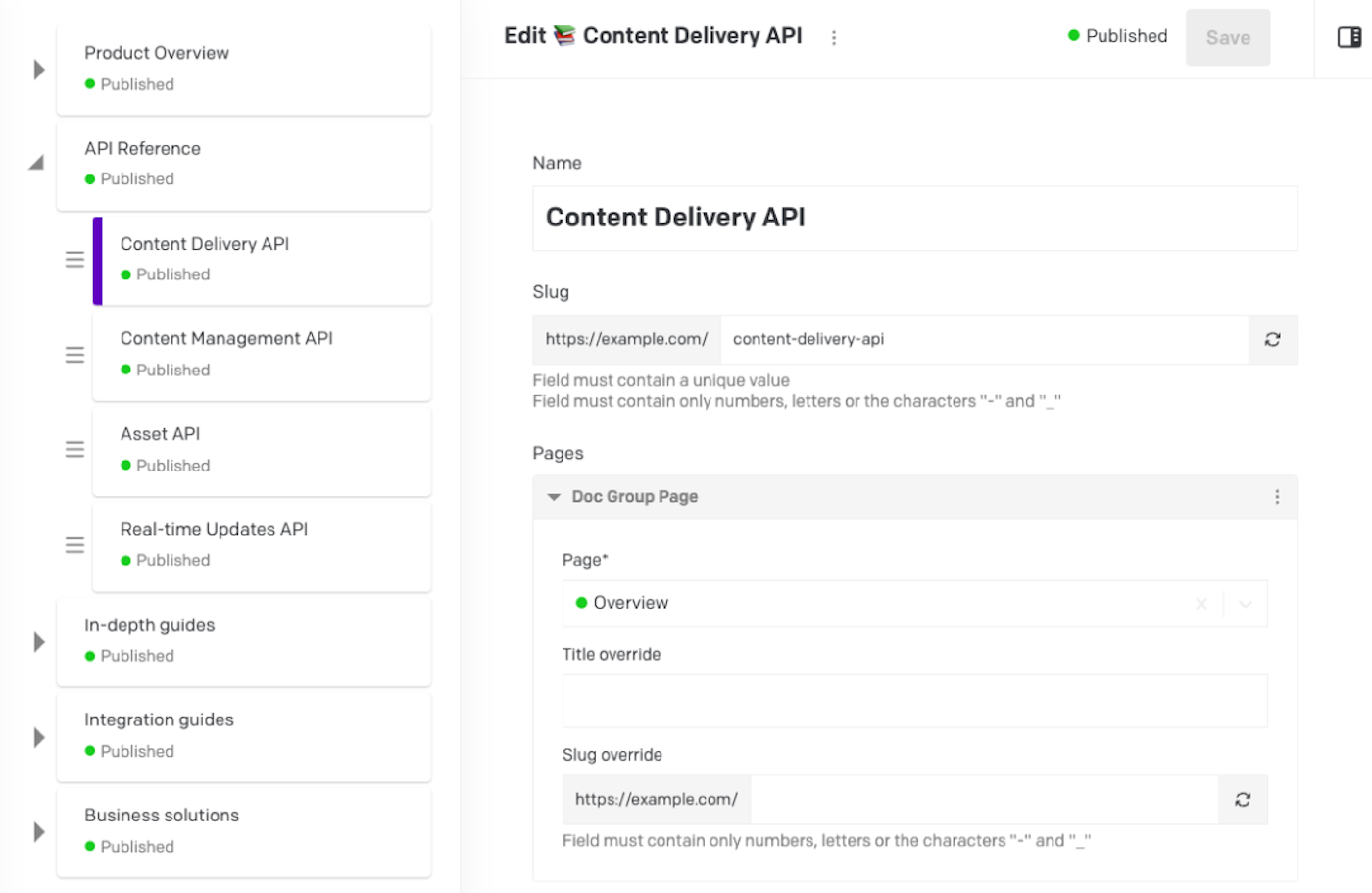
Organize records in parent-child hierarchies, like categories and subcategories for your products or the navigation of your site.

Define reusable blocks with strict fields, like a call to action or an image carousel. Nest them, add them to Modular Content or embed them in Structured Text.
“Modular Content and Blocks are the secret sauce in DatoCMS. We can set up the website and the authoring side almost infinitely in any way we want.”

Add locales to create and manage content in multiple languages within the same project, and reach a global audience wherever they are.
Upload images, videos, documents and audio, and we optimize and deliver them through our CDN, with imgix for images and Mux for video.
Your content is delivered from a global CDN, close to your users, so pages load fast and reliably wherever they visit from.
Features specifically focused on giving content teams and creators the right tools.

Give editors reusable components they can drag and drop to build rich layouts, pages and stories, without waiting on a developer.
“Modular content is one of the coolest features in DatoCMS... it lets you build custom landing pages in a matter of minutes!”


Write and format text, add media, links and custom blocks in an editor that feels familiar if your team comes from WordPress, Notion or Ghost.

Editors click any element on your website and edit it in DatoCMS, either in a new tab or side by side with a live preview.

Organize all your images, videos, audio files or documents and search by filtering on dominant colors, tags, EXIF data, size, orientation, notes and more.

Schedule content to publish or unpublish at a set time (per-locale supported), so nobody has to stay online to push changes live.
“Dato's team has come up with the most elegant solution I've seen for rich text and structured content with their Structured Text field. It combines both concepts into a single easy to use, yet powerful and flexible experience.”

Prefer Markdown? Use a dedicated Markdown editor for the fields where your team would rather write in Markdown syntax.
See who’s working on what in real time. Records someone else is editing get locked, so you never end up overwriting each other.
Save and share filtered views of your content, or use Quick Search to find anything across your project in a few keystrokes.
See a record’s publishing status, linked records and update history at a glance, next to the content you’re editing.

Shape the navigation in the UI around how your editors work: group related models and blocks into sections, and add external links where needed.
“Dato gives us the tools to focus on the admin user experience. And the more we can ensure that the CMS experience for our clients is easier, and they don't have to ask us questions, the better.”


Use link and reference fields to connect records to each other and build a structured, cross-referenced content model.
Set SEO metadata and social sharing settings for each record (with fallbacks), so every page looks right in search results and when it’s shared.
A dedicated slug field lets editors set the URL of each record, keeping your permalinks consistent and SEO-friendly.
Handle content in multiple languages with locales and translation support, and reach a global audience from a single project.
Set validation rules on your fields, so content has to meet certain criteria before anyone can publish it.
Define your own approval steps from draft to published, so every piece of content goes through the right people before it goes live.
Every change is logged in the record’s history. Compare versions and revert to an earlier one when something goes wrong.
Select multiple records and update them in one batch, instead of editing them one at a time.
When you publish or unpublish a record, DatoCMS can do the same for its linked records, recursively, keeping your changes consistent.
Preview your changes on your live website from inside the CMS, exactly as they’ll look, before you hit publish.
“For our clients, being able to instantly view the result of their changes on the final site is simply critical. The fact that you don't need a staging server, and you don't even have to refresh the page, well, that's the icing on the cake that makes everything wow.”


Set default titles and alt text at the asset level, localize them for each market, or add custom metadata fields to your assets.
Crop and adjust images right inside DatoCMS, without switching to another tool, and keep visuals consistent across your site or app.
AI tags your images automatically, with labels like “portrait” or “nature”, so they’re easy to search and organize.
DatoCMS follows your system’s light or dark setting automatically, or you can set it manually.
From our APIs to the CLI, we put a lot of focus on delivering a solid DX.
Fetch the exact content you need with our GraphQL Content Delivery API, and deliver it quickly to your users.
Create, update and delete anything in your projects programmatically with our REST Content Management API.

Try queries against your content in the GraphQL playground, and debug them before they make it into your code.
Preview drafts through our GraphQL API and review every change on your site before it goes live.
Keep your site in sync with DatoCMS as content changes, through our GraphQL Real-time Updates API for near-instant updates.

Cache tags tell you which records each response uses, so you can invalidate exactly the cached content that changed and keep your site fast.
Use our libraries for React and Next.js, Vue and Nuxt, Svelte and SvelteKit, and Astro to bring DatoCMS into your frontend.
Start from a pre-configured starter for Next.js, Astro, Remix, Svelte, Vue.js and more, already wired up to DatoCMS.
Change your content and schema from AI tools like Claude and ChatGPT. The DatoCMS MCP gives them tools for discovery, planning and execution.
Skills are Markdown playbooks your agent loads when it needs them, with the APIs, patterns and conventions to get DatoCMS work right the first time.
All 500+ pages of our docs in one clean Markdown file, docs-full.txt, so your LLM tools get accurate, up-to-date answers about DatoCMS.
Build your own plugins with our Plugin SDK and UI components, and extend DatoCMS to fit exactly what your team needs.
Add basic search to your frontend with DatoCMS Site Search, without paying for a third-party service like Algolia or Elasticsearch.
Resize, convert and optimize images with simple URL parameters through our Images API, and serve the right file for every screen.
Stream video with adaptive bitrate, so the quality adjusts to each viewer’s connection and playback stays smooth.
Responsive images out of the box, with lazy loading and BlurHash or ThumbHash placeholders, powered by our imgix integration.
Drop a pre-built video player component into your frontend framework and get optimized playback without building your own.
Filter Modular Content and Structured Text fields by the content of their blocks, and get the data you need without extra API calls.
Manage projects and user accounts programmatically with our REST Projects and User Management API, instead of clicking through the dashboard.
Create API tokens with precise permissions, so each integration can only reach the data and actions it actually needs to.
Automate your DatoCMS tasks from the terminal with our CLI, including generating and running migrations.
Type-safe access to every DatoCMS API with our TypeScript client, so your IDE catches mistakes before your users do.
Make schema changes and let DatoCMS generate the correct migration script for you, instead of writing it by hand.
Script your content and schema changes as migrations, so every release is repeatable and your data stays intact.
DatoCMS offers Digital Asset Management (DAM) out of the box to optimize your media.
Images and videos are served from a global CDN, so they load fast and buffer less for viewers anywhere in the world.
“We aired our first Super Bowl ad and the website performed flawlessly, even under high load, which was awesome. We’re transitioning all our sites to DatoCMS in the coming months.”

Convert images to the format each device needs with a single URL parameter, thanks to our deep integration with imgix.
Crop, rotate, apply color filters, tweak colors and add basic shapes or text to uploaded images with the built-in editor.

Images are compressed automatically without losing quality, so your pages load faster with no extra work from your developers.

Resize, crop, rotate and filter images with the built-in tools, or add URL parameters to serve them with the right transformations.

Set a focal point on any image, like a face or a product, and it stays in frame across every crop and aspect ratio.
Upload a video in any supported format and we convert it, so every viewer gets a streamable version that plays smoothly on their device.
Trim, resize, rotate, apply color filters and tweak colors on uploaded videos with the built-in editor.
Video quality adjusts to each viewer’s connection as they watch, so playback stays smooth on fast and slow networks alike.
Add secondary audio tracks and subtitles to your videos, or generate subtitles automatically with speech recognition from Mux.
Stream in 2K or 4K. The player picks the best resolution for each screen and connection, so high resolutions only stream when they help.
Granular localization options to ensure you connect with your customers wherever they are.
Create a locale for each language and region, so you can communicate in de-DE, de-AT or de-CH, not just in German.
Choose which fields need translating and which stay the same in every language, instead of localizing whole models.
Make each locale optional or required, so nothing gets published until the languages you need are filled in.
Publish and unpublish each locale separately, and release localized content on the schedule that suits each market.
Give people editing rights for specific languages, so each translator or market team only works on their own locales.
Connect localization services like Crowdin, Yandex and OpenAI to speed up your translation workflow.
Editors can use the DatoCMS interface in their own language, including French, Czech and German, and in their own timezone.
Rename UI labels to match the words your team already uses, so the CMS fits your workflow instead of the other way around.
Plugins allow you to extend the capabilities of the CMS for specific use-cases.
Browse 100+ ready-to-use plugins from us and the DatoCMS community to unlock additional capabilities like conditional fields and table editors.
Build plugins for your own needs and keep them private. They can live in a field, in the sidebar or on a page of their own.
Need a Shopify product picker or an A/B test variation? Build custom field editors that match exactly how your content works.
Add your own sections to the record sidebar, giving editors quick access to the tools and widgets they use every day.
Add your own pages to the DatoCMS interface, so editors get custom tools and a branded experience in the same place.
Connect your project to hosting providers like Netlify and Vercel to speed up deployments and go live sooner.
Rebuild your site on Vercel, Netlify or your own platform automatically whenever content changes in DatoCMS.
Already using a DAM like Cloudinary? Connect it to DatoCMS and keep working with the assets you already have.
Call your own services when something happens in DatoCMS, whether you’re integrating your tools or just keeping an eye on things.
Shape the payload of outgoing webhooks into the exact format your systems expect, so the data arrives ready to use.
We have measures in place to ensure your content is not at risk of loss or inconsistencies.
Editors work in the primary environment while developers test changes in sandboxes, which work like code branches.
Fork any environment into an exact copy, with models, records, assets, plugins and locales, or use a fast fork for quick changes.
Promote a sandbox to become your new primary environment instantly, with no service interruption for your editors or your visitors.
Use our CLI to compare two environments and generate the migration script between them automatically.
Turn on maintenance mode during migrations to stop edits on your primary environment. We recommend it for any schema change, just to be safe.
Roll back to a previous environment instantly and undo changes you didn’t want, with your content intact.
Robust features to put your mind at ease when using DatoCMS at scale.
Group your teams, projects and resources into organizations, so each one is managed separately with clear oversight.
Give organization members roles that match their responsibilities, so sensitive settings stay with the people who need them.

Set exactly what each role can see and do across models, environments, locales, assets and workflows, with rules based on record status.
Set role-based permissions inside each project, so every team member has the access their work requires, and nothing more.
Create custom roles for users and API tokens, each with exactly the permissions their tasks need.
Track API calls, bandwidth and video streaming across your projects from the dashboard, so you can troubleshoot issues and control costs.
Require two-factor authentication for every user, and add a second layer of protection against unauthorized access.
Let your team sign in with the accounts they already use, through SAML and single sign-on, for easier access and better security.
Add and remove users automatically from your identity provider with SCIM provisioning, so access always matches your directory.
Audit logs record who did what and when across your project, so you can track changes and stay compliant.
Serve the DatoCMS interface from your own domain, whether it’s for brand consistency or to meet your security requirements.
Serve your assets from your own domain for a consistent brand experience, whether or not you use our built-in DAM.
Already have a cloud storage setup? Host your assets in your own S3 or Google Cloud Storage bucket to meet your storage requirements.
White-label DatoCMS with your own look and identity, so your team or your clients get an experience that feels like your brand.
Webhooks come from static IPs, so your servers can safely allow them through and receive every event from your projects.
Our foundations help companies of all sizes scale without obstacles.
All communication between your servers and ours is encrypted in transit, so nobody can read your data on the way.
Your data is encrypted while it’s stored on our servers, so it stays unreadable to anyone without proper authorization.
Get regular reports on potential threats and vulnerabilities, and on what we’re doing to mitigate them.
Offline backups mean you can recover your data even after unexpected data loss or a system failure.
Our team monitors the infrastructure around the clock and responds to issues promptly, keeping disruptions to a minimum.
Frequently requested content is cached at the edge, so your pages load faster for every visitor.
Every plan serves your content, images and videos from 75+ CDN edge nodes, delivering over 500TB of data every month.


